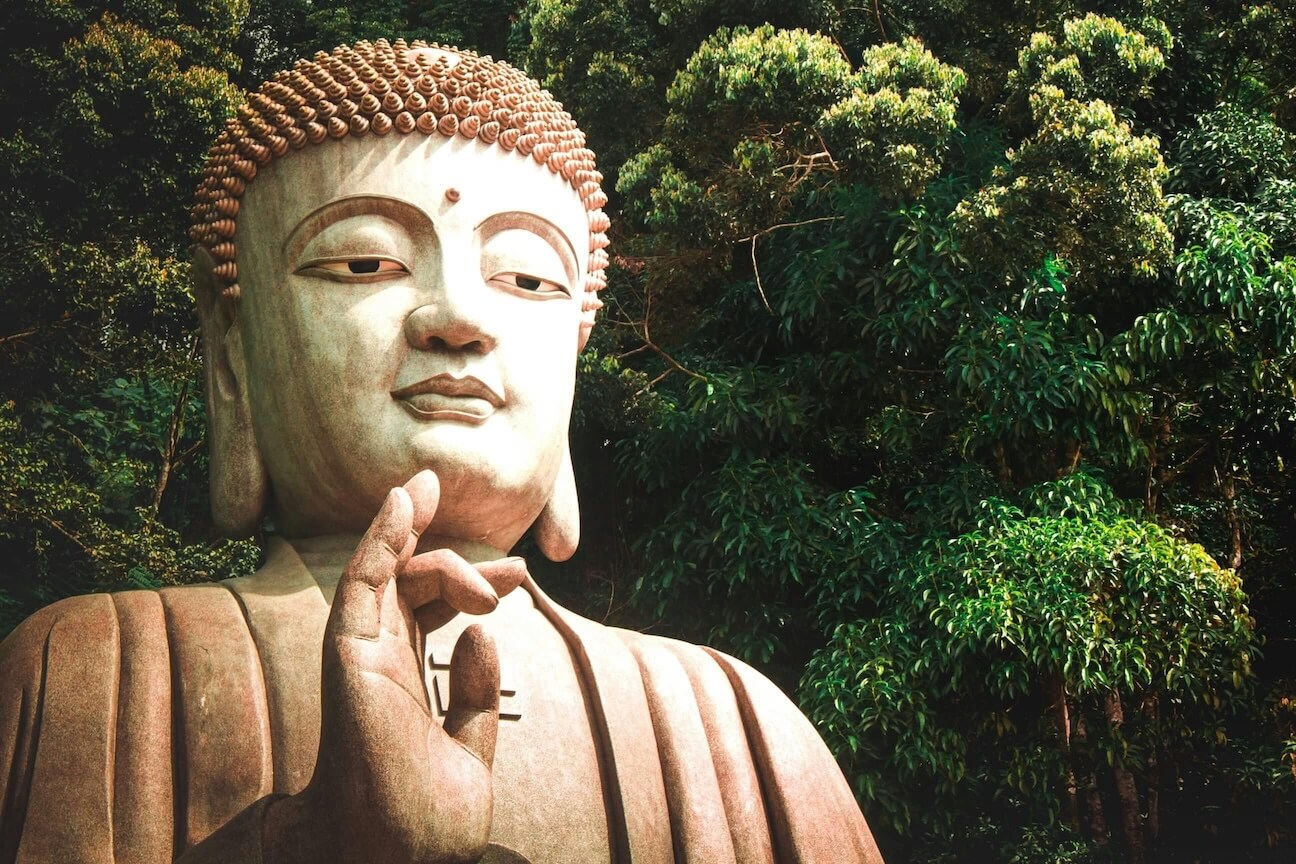

The rituals fell away, but they had already become part of how I move through the world, or at least how I wanted to move through life: With attention, with gratitude, with the sense that what is impermanent is not meaningless. If anything, it is more precious for being brief - we only get this one chance to be.
Washing the Buddhas: A Living Ritual
2–3 minutes
At Original Qi, we are not a Buddhist place of worship, and we welcome every philosophy, every spirituality, every seeker. But I believe deeply that certain practices carry wisdom that belongs to everyone — and I am honored to share some of what has shaped me.
One of these is the ritual of washing the Buddhas.
THE PRACTICE
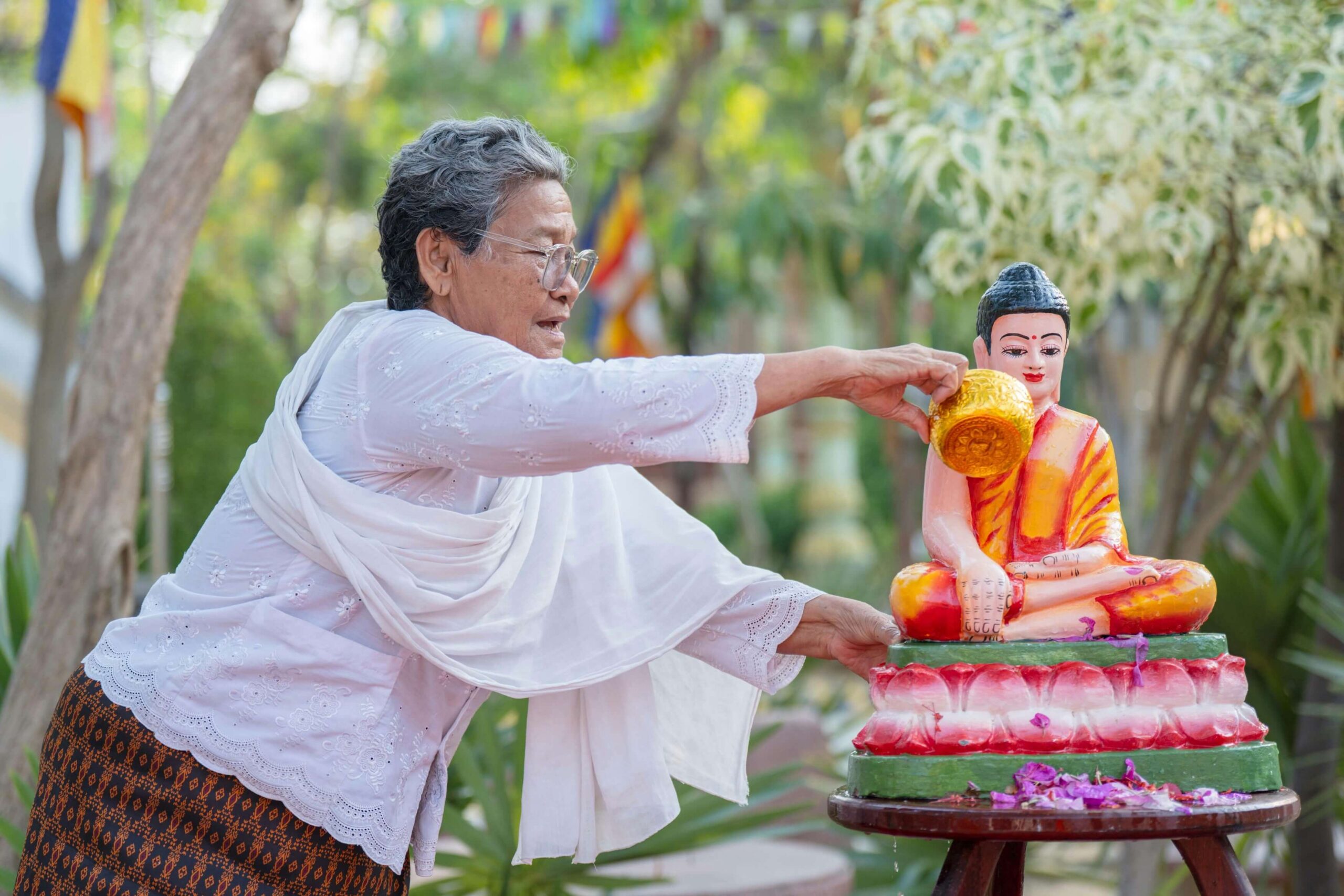
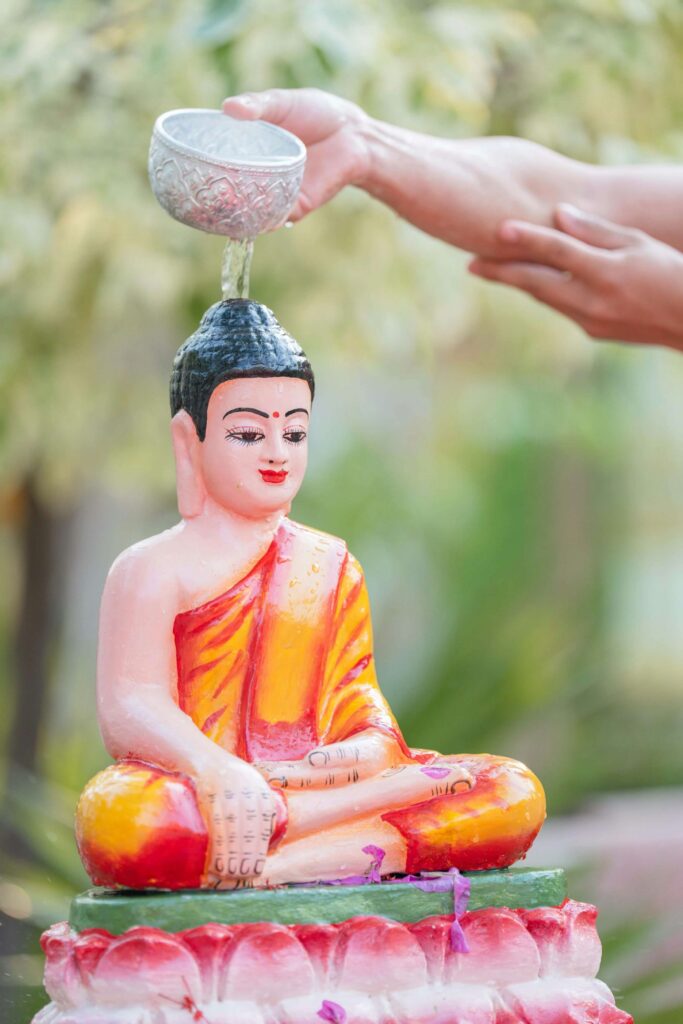
An array of Buddha statues is arranged alongside a ceremonial bowl of water infused with flower petals. A bundle of flowers is used to brush the petal-infused water gently over each statue — and then over oneself. The intention is threefold: to cleanse, to send blessings outward to the universe and to the ancestors, and to return those blessings inward to the self.
This ritual is rooted in a Laotian Buddhist tradition that is my upbringing, particularly associated with Songkran — the Lao New Year — in which images of the Buddha are bathed with scented water as an act of purification and renewal. Water carries the prayer. The flowers carry the intention. The repetition of the gesture — statue to statue, then water to skin — is the meditation and ceremony.
It is one of my most loved rituals because it asks nothing intellectual of you. You do not have to understand it to feel it. You simply pick up the flowers, and you begin.
The Three Buddhas We Honor
In our ritual at Original Qi, three Buddha statues stand together — each representing a different quality of awakened presence:
Fearless Buddha Holding the gesture for reassurance and protection, this Buddha grants fearlessness needed on the path to enlightenment. | Medicine Buddha Holding the myrobalan plant, this Buddha represents the healing potential and our capacities to heal. Often invoked for healing physical illnesses, and to pacify the inner afflictions of desire, anger and ignorance. | Buddha in Meditation Stillness. The quality of presence that holds everything without grasping. The reminder that peace is not elsewhere — it is within ourselves which each breath. |
Together, they form a small altar of intention: the wisdom to learn and understand, the care to heal, and the mindfulness to be with ourselves.
What Remains
Theravada Buddhism has survived two and a half millennia because it speaks to something universal in human experience: the ache of impermanence, the hunger for meaning, the possibility of peace. For Laotian communities in America, it has also been a way of surviving displacement — a thread back to something that diaspora cannot fully take away.
I share these practices at Original Qi not as doctrine, but as invitation. You do not need to be Buddhist to wash the Buddhas. You do not need to believe in anything beyond the weight of the flowers, the coolness of the water, and the small and radical idea that we can grant blessings into the world and back to ourselves.
It is a ritual of Love.
– WITH GRATITUDE
Come wash the Buddhas with us. Bring whatever you carry. There is room here for all of it.

Related Posts